Lithium Iron Phosphate IBUvolt® LFP400
Cathode Material for Lithium-Iron-Phosphate Batteries
IBUvolt® LFP400 (LiFePO4) is a high-purity lithium iron phosphate cathode material for lithium-ion batteries, specifically developed for industrial use. We have been producing IBUvolt® LFP400 continuously with consistent quality since January 2014 and thus have many years of experience in the manufacture of LFP cathode material.
IBUvolt® LFP400 was originally developed for use in NMC (nickel-manganese-cobalt) blends. The resulting particle shape and particle size distribution are particularly interesting for novel coating processes and innovative electrode concepts.
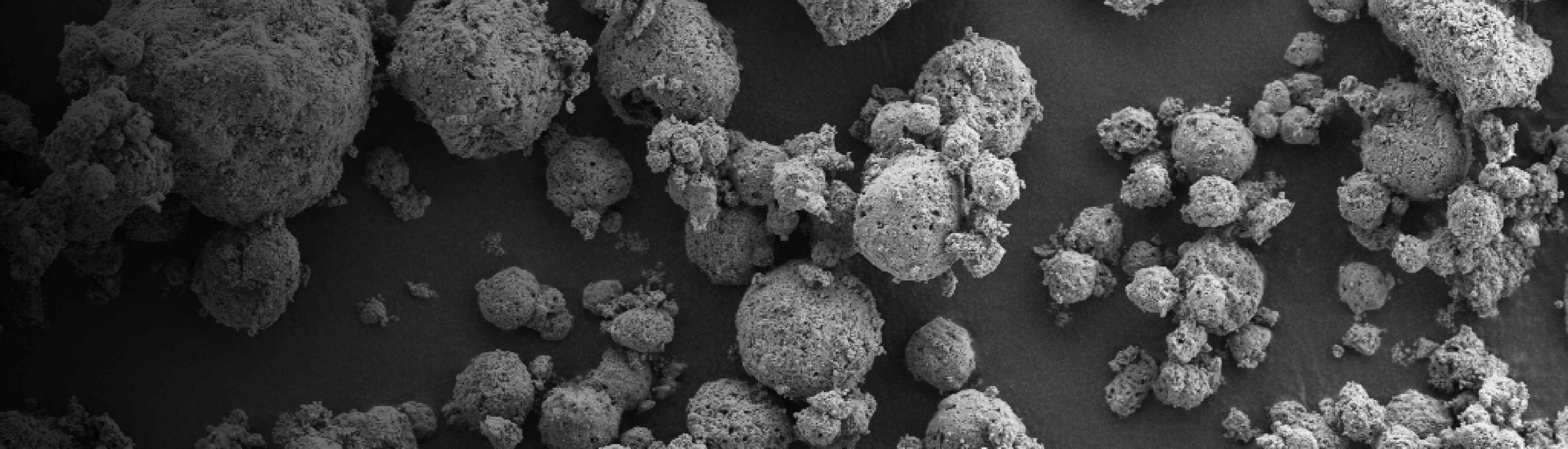
Compared to fine-particle LFP (IBUvolt® LFP402), IBUvolt® LFP400 exhibits very good flowability as a powder and reduced dust formation. This facilitates handling during production, supports stable process conditions, and contributes to clean, efficient electrode manufacturing.
- Easy to process in dry coating and in aqueous solution
- High cycle stability for a long service life
- Advantageous behavior at low temperatures
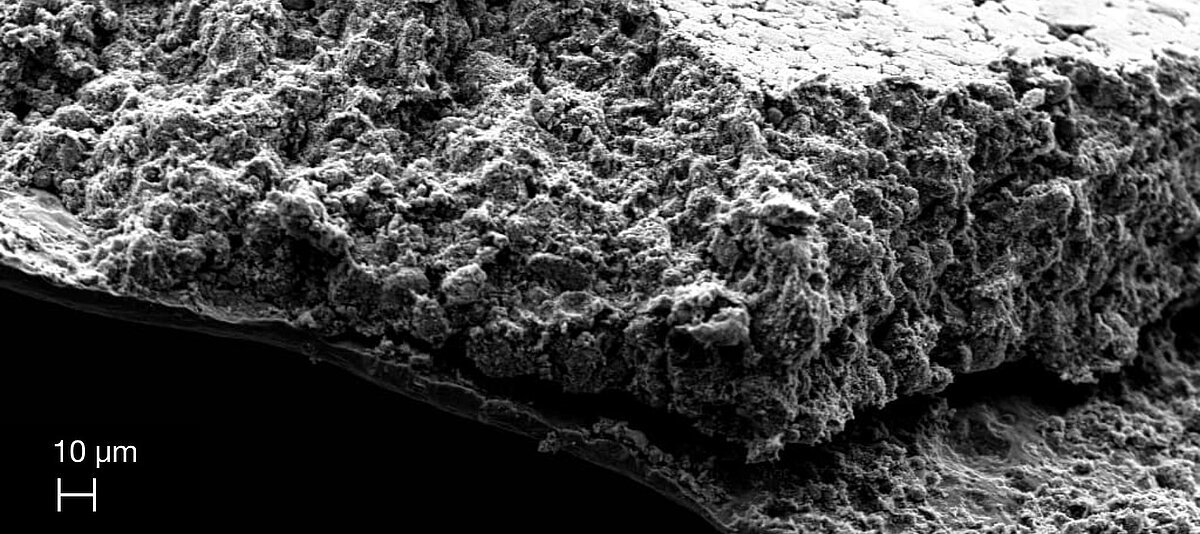
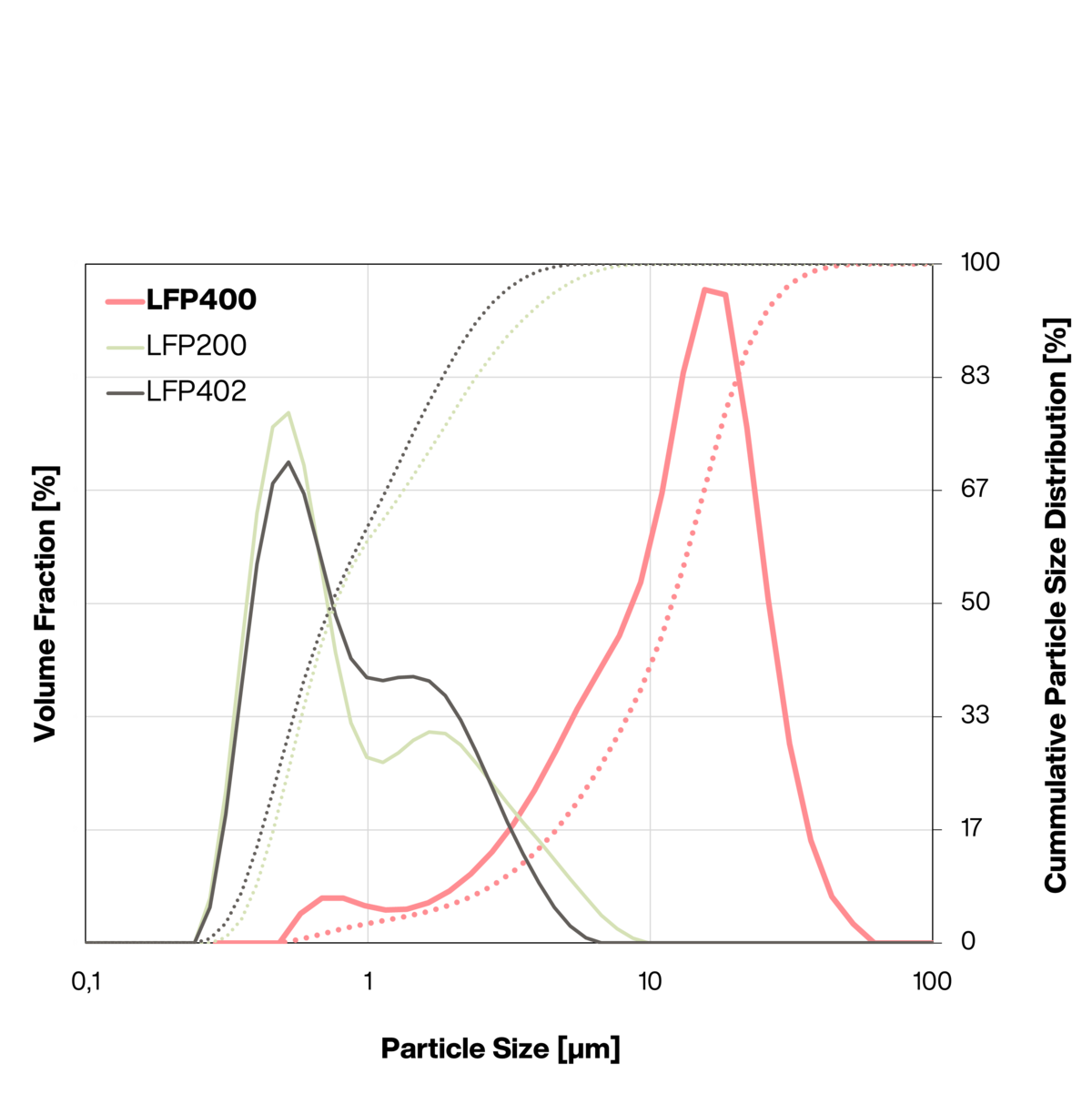
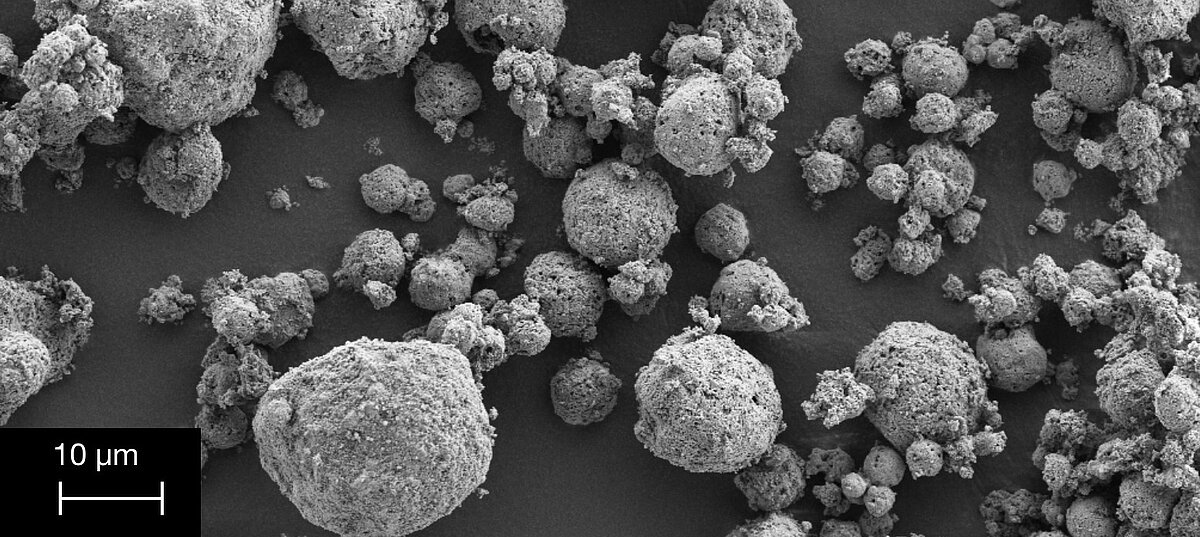
IBUvolt® LFP400 is a coarser LFP cathode material with an average particle size (d50) of approximately 11 µm. Electrodes coated with this lithium iron phosphate material achieve very good specific power, solid volumetric energy density, and excellent cycle life over many charge and discharge cycles.
IBUvolt® LFP400 has been successfully tested for use in stationary energy storage systems and has proven itself in both aqueous and dry coating processes. This makes the material particularly suitable for industrial applications where process reliability, efficiency, and the longevity of the battery cells are paramount.
In close collaboration with customers and industry partners, our application engineering team (Link) continuously explores new fields of application for this LFP cathode material. In doing so, we specifically target applications where the electrochemical properties of IBUvolt® LFP400 offer the greatest technological and economic value.
The IBUvolt® LFP400 delivers consistently stable capacity over several thousand charge cycles, offering an exceptionally long service life compared to other products on the market. With similar upfront costs, this significantly reduces the specific costs per charge cycle or per kilometer driven—in practice, operating costs can be reduced by up to 50%.
In extensive testing, IBUvolt® LFP400 was successfully tested over more than 10,000 charge and discharge cycles. The tests were conducted using cylindrical cells with a nominal capacity of up to 50 Ah and a discharge rate of 2C. These results underscore the suitability of IBUvolt® LFP400 for demanding applications in long-life lithium iron phosphate battery systems, such as in stationary storage and electric mobility.
![Das Diagramm zeigt die Kapazitätserhaltung [%] im Vergleich zu den Ladezyklen [-]. Der pinke Graph fällt mit zunehmenden Zyklen, was den Kapazitätsverlust der Batterie über mehr als 10.000 Ladezyklen darstellt.](/fileadmin/_processed_/a/2/csm_IBUvolt_LFP_400_Cycle_Stability_fe2d2fef82.png)
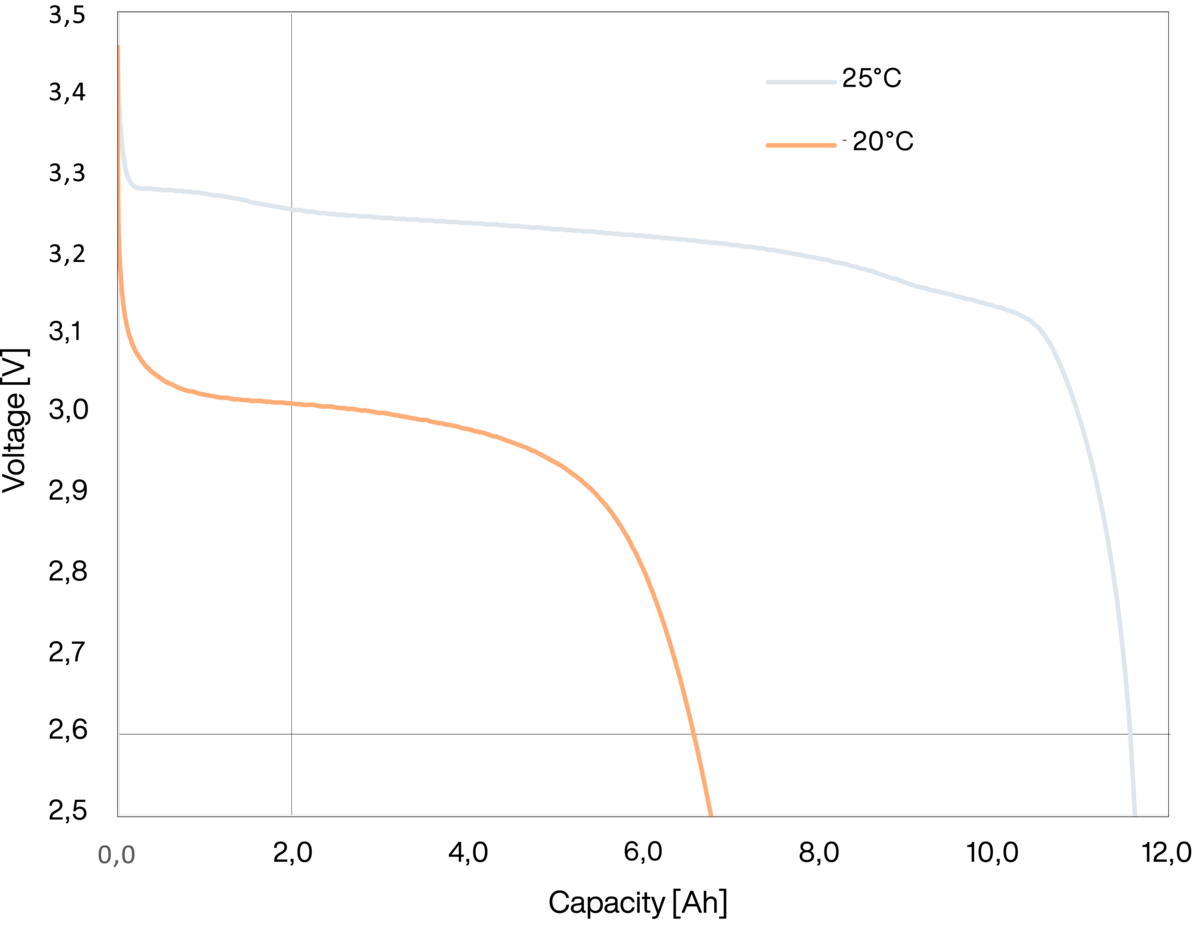
IBUvolt® LFP400, with an average particle size of 11 µm, is particularly well-suited for applications where conventional LFP cathode materials reach their limits—such as in the operation of lithium iron phosphate batteries at low temperatures.
At ambient temperatures well below freezing, batteries typically deliver less current than at room temperature, as diffusion processes slow down and the mobility of lithium ions decreases. However, the porous structure of IBUvolt® LFP400 supports faster ion transport within the particle pores. As a result, sufficient current is available even at -20 °C with an average cell voltage of approximately 2.8 V.
These outstanding low-temperature properties of IBUvolt® LFP400 were successfully demonstrated in tests with cylindrical lithium-ion cells in the 4690 format at low temperatures. This makes this LFP cathode material ideal for applications in cold environments, such as in electric mobility, commercial vehicles, or stationary energy storage systems in climatically challenging regions.
The 4690 battery cell, also known as the 46xx cell, is a cylindrical lithium-ion battery whose name is derived directly from its dimensions: it has a diameter of 46 mm and a height of 90 mm. This cell size is part of a new generation of high-performance batteries specifically developed for applications in electric mobility.
Compared to earlier cylindrical cell formats, the 4690 cell enables higher energy density, more efficient production, and thus optimized use of space in battery packs. Together with our industry partners, we have successfully developed cell prototypes in this format to demonstrate the potential of 4690 lithium-ion cells for use in electric vehicles and other demanding applications.
| Cell & Cathode Information | |
|---|---|
| Cathode | Lithium Iron Phosphate (LFP400) |
| Anode | Synthetic Graphite |
| CAM content | 92% |
| CAM loading | 3 mAh/cm2 |
| Density | 1.7 g/cm3 |
| Electrode thickness | 269 μm |
| Electrical Cell Caracteristics | ||
|---|---|---|
| Nominal capacity at 0.2 C, 25 °C | Ah | 13.6 |
| Nominal operating voltage | V | 3.2 |
| Charging voltage | V | 3.5 |
| Recommended cut-off discharge voltage | V | 2.5 |
| Energy | Wh | 43.5 |
| AC impedance (1k Hz) | mΩ | < 1.95 |
| DC resistance (2 s pulse at 4 C 50% SOC) | mΩ | < 4.6 |
| Specific energy | Wh/kg | 127 |
| Energy density | Wh/l | 291 |
| Specific power (5C, 50% SOC) | W/kg | 609 |
| Power density (5C, 50% SOC) | W/l | 1380 |
| Discharge Current | |
|---|---|
| Recommended at 25 °C | 13.6 A (1 C) |
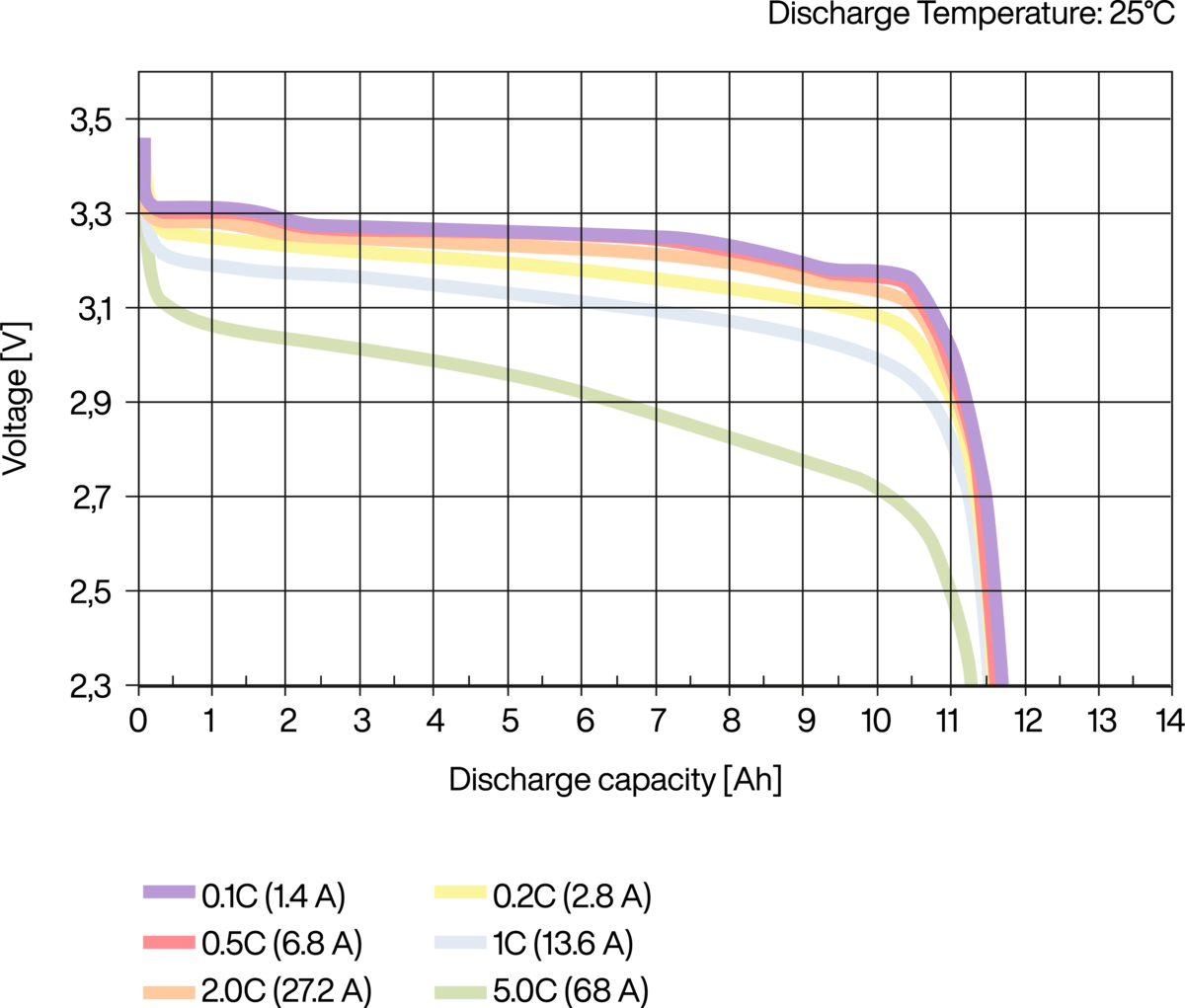
| Maximum continous at 25 °C | 68 A (5 C) |
| Recommended at -20 °C | 2.8 A (0.2 C) |
| Maximum continous at -20 °C | 13.6 A (1 C) |
In our 4690 cell prototypes, we were able to successfully confirm the results obtained in our electrochemical laboratory using an industrially relevant cell format. The cells can be reliably discharged at high currents while exhibiting a stable performance profile.
In a shortened but practical test program, we were also able to once again demonstrate the excellent cycle stability of IBUvolt® LFP400. These results underscore the suitability of our LFP cathode material for high-performance, long-lasting lithium-ion batteries in industrial applications, particularly in electric mobility and stationary energy storage systems.